The last-minute rush before kick-off
ThingCo analysis of telematics data from UEFA Euro 2024 provides vital warning signals for insurers for FIFA World Cup 2026
As England’s first match in the FIFA World Cup 2026 approaches (9pm BST Wednesday 17 th June 2026), new data from insurtech, ThingCo, provides critical insight into road usage around major football events, enabling insurers to implement road safety intervention campaigns.
ThingCo conducted minute-by-minute analysis of driving data from its telematics-enabled book of drivers for the UEFA Euro 2024 Final 1 . Benchmarked against a three week baseline of the same days and times before and after the final, the analysis shows a dangerous increase in speeding incidents both immediately before kick-off and after the final whistle. The data also shows a dramatic ‘clearing’ of the roads during the match, followed by a surge in activity the moment the final whistle was blown.
Speeding incidents
- In the hour before the match kicked-off, there was a 31.52% increase in speeding
Occurrences per mile versus the baseline
- There was a 20.4% increase in the amount of speeding events in the hour after the match had finished
Traffic activity
- 66% fewer drivers were on the road at peak match time compared to the baseline
- The 20 minutes immediately after the full-time whistle saw traffic quadruple
- The one hour period after the match saw up to 50% more traffic on the road compared to the baseline for that time of day
- There was a small uptick in activity during half-time, consistent with short journeys – perhaps a last-minute trip to a petrol station or a friend’s house - before roads quietened again for the second half
The most striking finding is what happened the moment the match ended. For more than 90 minutes after the final whistle, roads were busier than they would typically be at that time on a Sunday evening - and they were doing so at greater speed.
Critically, in the hour after the match, speeding events increased by more than 20% compared with the baseline period, and this occurred despite average trip distances being shorter than usual. Drivers were not simply covering more ground; they were driving faster across the journeys they did make.
“The elevated speeding data alone is concerning, but it does not exist in isolation,” explained Dr Carlo Conner-Hill, Head of Data Analytics at ThingCo. “Emotions both before and after a match, especially one with national interest, will be heightened. There’s also the risk of alcohol consumption. Plus late night fatigue is likely to be an issue for the World Cup, with many of the matches set to finish quite late in the evening – or even in the early hours of the morning. This will be a key concern for insurers.
“Together, these factors create a risk profile that is significantly elevated. But it is one that telematics is uniquely placed to address. Insurers using telematics have a valuable and timely window to engage policyholders ahead of high-risk match days.”
ThingCo is recommending a range of interventions:
- Pre-match alerts warning of significantly higher-than-normal road activity expected in the 60–90 minutes after full-time, particularly for late-evening kick-offs
- Speed awareness reminders delivered on match days, noting that data indicates speeding rates rise materially on major football evenings
- Drink drive messaging integrated into pre-match or pre-kick-off emails and app notifications, normalising the conversation in a football context
- Safe journey planning nudges encouraging drivers who intend to watch at a friend’s house or pub to plan a non-driving route home before the match begins.
“Our data tells a compelling story about how major sporting events shape driving behaviour in ways that are entirely predictable and, therefore, entirely manageable,” added Dr Conner- Hill. “The World Cup gives the insurance industry a real opportunity to use telematics data not just to price risk, but to reduce it. A well-timed email before a match could make a genuine difference to someone’s safety that evening.”
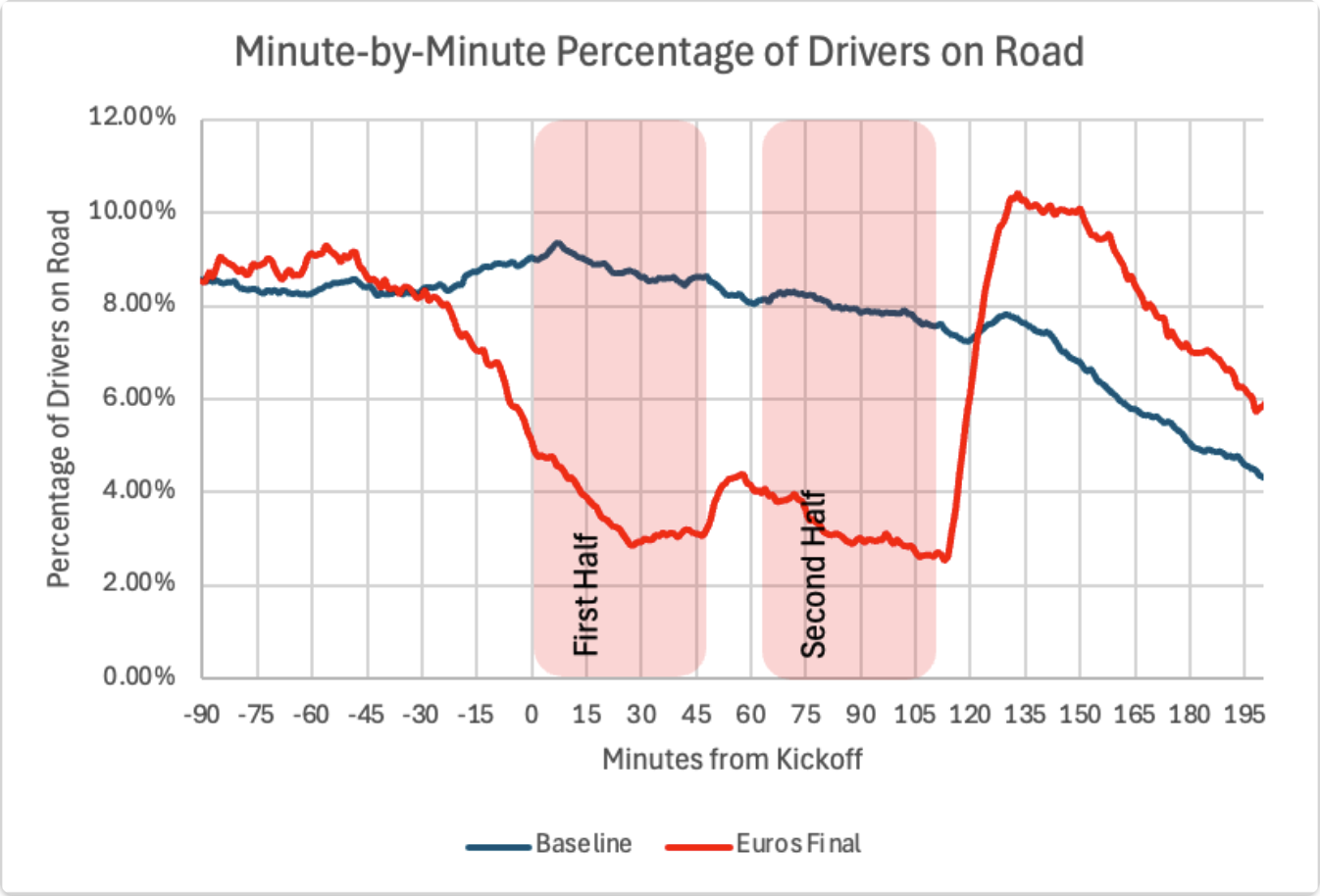
Figure 1: Minute-by-minute percentage of live policies on the road — Euros Final Sunday 14 th July 2024 kick-off 8pm vs baseline.
Please see footnote 2 for breakdown of dates/times
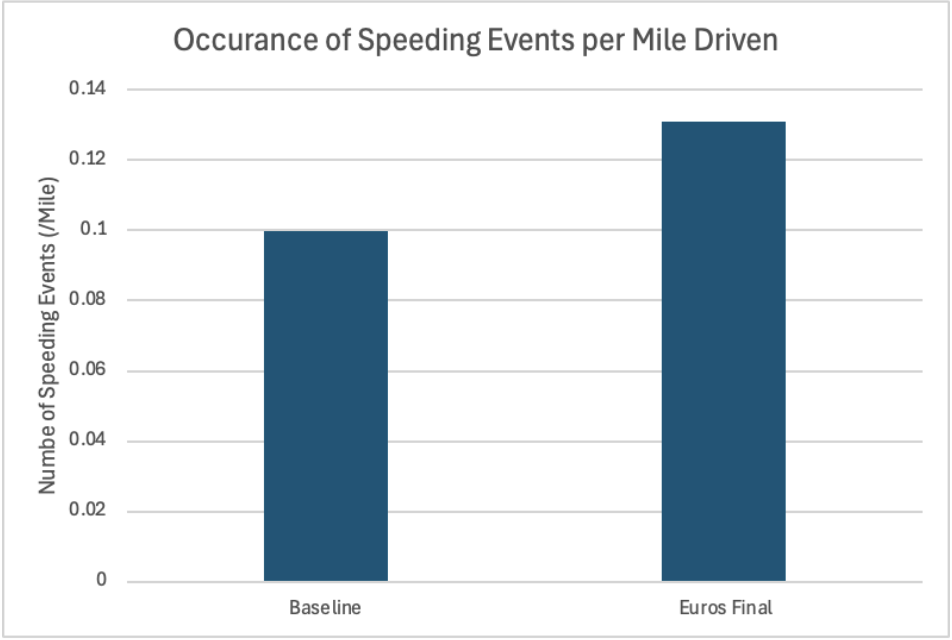
Figure 2: Average speeding events per mile of driving — Euros Final Sunday evening vs baseline
1. Analysis is based on minute-by-minute telematics data from ThingCo’s live policy book during the UEFA Euro 2024 Final (Sunday 14 July 2024). The baseline is calculated from the three weeks before and three weeks after the match, at the same time of day and day of week.
2. Date of Match: 2024-07-14
Baseline Dates: 2024-06-23, 2024-06-30, 2024-07-07, 2024-07-21, 2024-07-28, 2024-08-04
18:30 - 23:22 BST.
18:30 – 20:00 (pre-match) (Minutes -90-0)
20:00 – 20:48 (first half) (Minutes 1-48)
20:48 – 21:03 (halftime) (Minutes 49-63)
21:03 – 21:52 (second half) (Minutes 64-112)
21:52 – 23:22 (post-match) (Minutes 113-202)
The individual speeding hours analysed are:
19:00 - 20:00 (pre-match hour)
21:52 - 22:52 (post-match hour)